
Home · Blog · SORA Ecosystem · · Updated Dec 17, 2025 · 9 min read
SORA v3: Innovations from the SORA Economic Forum 2024
Key takeaways from SEF 2024: SORA v3 (Nexus) architecture, Parliament governance, CBDC integrations, and the path to a decentralized global economy.
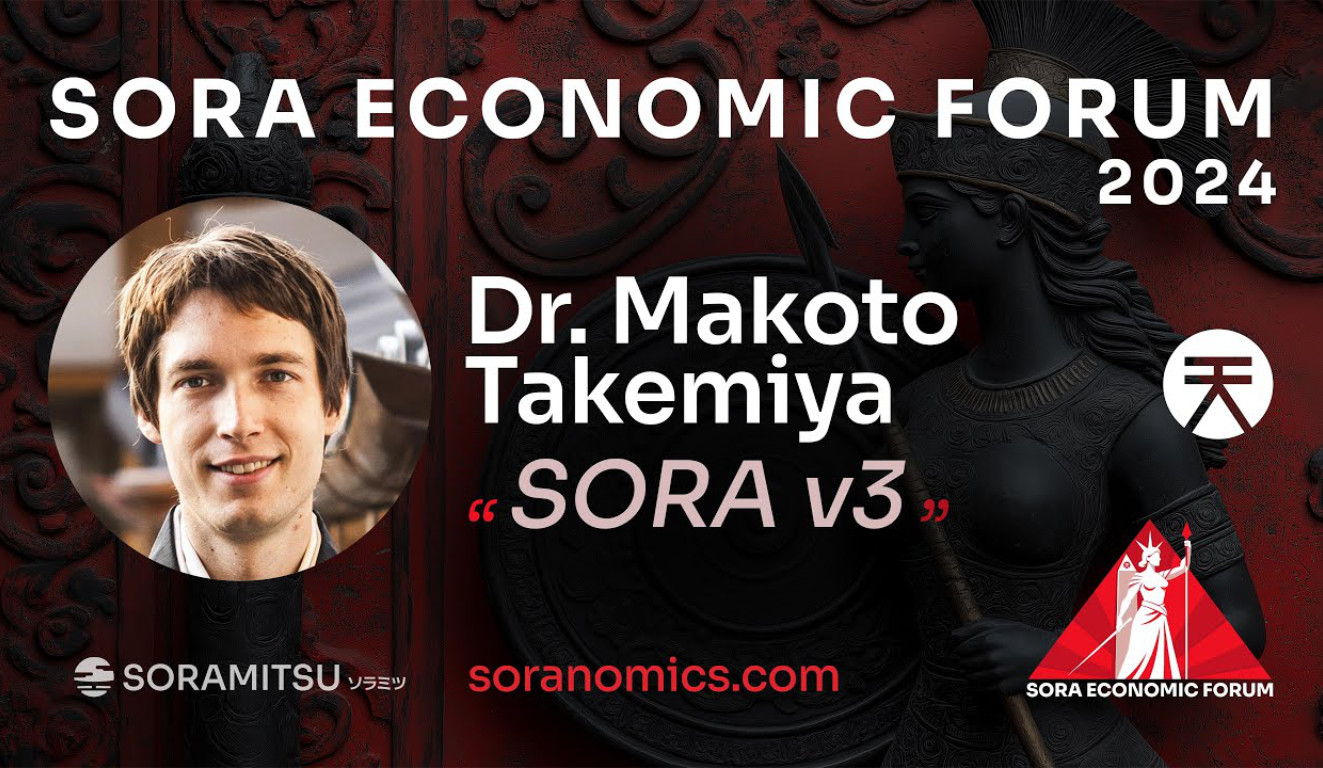
The SORA Economic Forum 2024 brought together visionaries, technologists, and economists to explore the latest advancements in blockchain technology, decentralized finance (DeFi), and governance models. Hosted by Dr. Makoto Takemiya, co-founder of SORAMITSU and a prominent contributor to the SORA ecosystem, the forum provided an in-depth look at the transformative potential of blockchain in shaping economic and societal progress.
The original video format of this presentation can be viewed here.
TL;DR
- • SORA v3 (Nexus) — New hub chain on Hyperledger Iroha targeting 20,000 TPS
- • SORA Parliament — Athenian-style governance with random selection to prevent corruption
- • CBDC Integration — Bakong (Cambodia) processes $300M daily; Solomon Islands, Palau pilots
- • TONSWAP — DEX for TON ecosystem built on SORA v3 infrastructure
- • XOR as Legal Tender — Framework for countries to adopt SORA for economic growth
Context: This article summarizes the SORA Economic Forum 2024 (November 20, 2024). Since then, SORA v3 development has progressed significantly — the Fujiwara Testnet is now live, and the SORA Nexus whitepaper has been released. SEF 2025 is currently underway.
The Mission of the SORA Economic Forum
The SORA Economic Forum, now in its third iteration, aims to advance discussions on innovation, technology, and governance to improve humanity. Dr. Takemiya emphasized the forum’s commitment to fostering collaboration over competition, aligning with the global need for collective solutions in a rapidly evolving world.
The forum’s timing was serendipitous, coinciding with the astrological entry of Pluto into Aquarius—a symbol of technological innovation and collective consciousness. This theme underscored the forum’s focus on using blockchain and DeFi as tools to not only adapt to global changes but to thrive within them.
Speaker Highlights
The forum featured 14 hours of talks from 16 speakers across central banking, climate finance, blockchain innovation, and economic policy:
| Speaker | Organization | Topic |
|---|---|---|
| Dr. Makoto Takemiya | SORAMITSU Co-Founder & CEO | SORA v3 Keynote |
| Clement Berthou | Royal University of Law and Economics, Cambodia | Monetary Infrastructure |
| Dr. Asmaa Sami | Central Bank of Egypt | Antitrust Policy in Financial Markets |
| Dr. Elwaleed Ahmed Talha | Independent Economic Advisor | Monetary & Fiscal Policy |
| Jean Baptiste Aboyitungiye | Banque de la République du Burundi | Central Banks and Climate Change |
| Dr. Ayo Teriba | Economic Associates (Nigeria) | Nigeria’s Economic Outlook |
| Ifeoma Malo | Clean Tech Hub Nigeria | Climate Finance Challenges |
| Ernest Bosha | Central Bank of Nigeria | Regulating Digital Assets |
| Dr. Iyabo Olanrele | NISER (Nigeria) | Fintech and Financial Inclusion |
| Johannes Duong | Oesterreichische Nationalbank (Austria) | Wholesale CBDC (DELPHI/CITADEL) |
| Paul Pacher | Oesterreichische Nationalbank | Blockchain Projects |
| Maximilian Pfeifer | Oesterreichische Nationalbank | DLT Topics |
| Shiva Bissessar | Pinaka Consulting Ltd. | CBDC in the Caribbean (DCash) |
| Kevin Itoiz | Ministry of Economic Development, Buenos Aires | Knowledge Transfer & Innovation |
| Diego Favarolo | Space AI Inc. | Data in Space |
| Tim Swanson | Clearmatics | Decentralized Derivatives |
The diversity of speakers — spanning African central banks, European financial institutions, Latin American innovation ministries, and blockchain pioneers — reflected the forum’s thesis: blockchain technology intersects with climate policy, financial regulation, and economic development across every region.
The Evolution of SORA: From Vision to Reality
Dr. Takemiya’s keynote address provided a comprehensive overview of SORA v3, the latest iteration of the blockchain-based economic system designed to foster rapid growth and innovation. He traced SORA’s journey from its inception to its current state, highlighting the following milestones:
- SORA v1: Introduced as a foundational layer for decentralized economic systems.
- SORA v2: Launched in 2021, this version saw over 11.6 million transactions, integration with Polkadot and Kusama ecosystems, and the creation of applications like Polkaswap and Fearless Wallet.
- SORA v3 (Nexus): The next-generation hub chain, now being built on Hyperledger Iroha 3. At SEF 2024, Dr. Takemiya demonstrated early functionality using Iroha 2; the architecture has since evolved to Iroha 3 with enhanced modularity, the IVM (Iroha Virtual Machine), and Kotodama smart contracts. See the SORA Nexus Complete Guide for current specifications.
Key Features of SORA v3 (Nexus)
SORA v3, codenamed Nexus, introduces fundamental architectural changes designed for institutional-scale adoption:
Scalability
| Metric | SEF 2024 Status | Target |
|---|---|---|
| Transactions per second | 4,000–5,000 (benchmarked) | 20,000 TPS |
| Block time | ~2 seconds | ~1 second (Nexus) |
| Finality | Near-instant | Sub-second |
The Palau Savings Bond demo at SEF 2024 showcased this speed — bond purchases confirmed in under 2 seconds on the testnet.
Hub Chain Architecture
The v3 “Hub Chain” serves as shared infrastructure connecting:
- Central Bank Digital Currencies — Each CBDC operates in a private subnet while minting occurs on the public chain for auditability
- DeFi Applications — TONSWAP, Polkaswap bridge, and future DEXs
- Cross-border Payments — Direct central bank-to-central bank transactions
- Savings Platforms — Palau bond system as proof of concept
Decentralized Governance
The SORA Parliament introduces Athenian-style democracy to blockchain governance, with randomly selected decision-making bodies to prevent corruption and faction formation.
Interoperability
Bridges connect SORA v3 to:
- SORA v2 (Substrate/Polkadot ecosystem)
- TON (via TONSWAP)
- Ethereum and other EVM chains (Multi-EVM bridge)
Update (Dec 2025): Since SEF 2024, SORA v3 architecture has evolved significantly. The SORA Nexus whitepaper now specifies the IVM (Iroha Virtual Machine) with Kotodama bytecode, Data Spaces for sovereign privacy zones, Lanes + Merge Ledger for parallel execution, and FASTPQ proofs for verification. The Fujiwara Testnet is live for community participation.
Blockchain’s Role in Global Economic Transformation
The forum highlighted blockchain’s potential to revolutionize financial systems by offering secure, efficient, and transparent solutions. Examples include:
- CBDC Success Stories: The Bakong system in Cambodia, developed by SORAMITSU, processes over $300 million daily and integrates with payment systems in neighboring countries like Thailand and Vietnam. Its success demonstrates blockchain’s ability to modernize financial infrastructure while fostering financial inclusion.
- DeFi Innovations: Applications such as Polkaswap and Fearless Wallet showcase the power of decentralized platforms to facilitate financial inclusion and cross-border transactions. These tools offer seamless user experiences and reduce costs, making financial services more accessible globally.
- Savings Bond Platforms: The Palau savings bond application demonstrates how blockchain can simplify complex financial instruments, providing accessibility and security for users. Retail investors can now participate in bond markets with unprecedented ease, thanks to blockchain’s efficiency.
Blockchain’s transformative potential extends beyond finance, encompassing sectors like climate change, where its ability to track and verify data can support sustainable initiatives. By leveraging blockchain technology, global economies can transition toward more equitable and transparent systems.
The SORA Parliament: Athenian Democracy for Blockchain
One of the most anticipated features of SORA v3 is the SORA Parliament — a multi-stage decision-making pipeline inspired by ancient Athens and based on political scientist Bericius’ paper “Democracy Through Multi-Body Sortition.”
The Three Athenian Principles
| Principle | Greek Term | Application in SORA |
|---|---|---|
| Political Equality | Isonomia | All XOR-bonded citizens have equal standing |
| Right to Contribute | Isegoria | Any citizen can propose agenda items |
| Random Selection | Sortition | Decision panels chosen randomly to prevent factions |
The Decision Pipeline
The Parliament operates as a multi-stage pipeline where you cannot know in advance who will make decisions:
- Citizenship — Bond XOR tokens to become a citizen with proposal rights
- Rules Committee — Randomly selected citizens define what types of proposals are valid
- Agenda Council — Reviews proposals as a spam filter before they proceed
- Interest Panels — Domain experts (organized as “ministries”) study proposals and provide analysis
- Review Panel — Collates expert opinions into a pros/cons summary
- Policy Jury — Randomly selected citizens make the final yes/no decision
Oversight Bodies
- Monetary Policy Committee — Sets proposals for monetary policy variables
- Financial Markets Authority — Regulates DEXs like Polkaswap and TONSWAP
- Oversight Council — Monitors all bodies for rule compliance
Why Random Selection? By not knowing who will make decisions until the last moment, the system prevents lobbying, bribery, and faction formation. This is “sortition” — the same method Athens used 2,500 years ago to prevent democracy from devolving into oligarchy.
The SORATOPIA Connection
Dr. Takemiya proposed an intriguing approach to testing Parliament governance: linking the SORA v3 canary network to SORATOPIA, the Telegram mini-game that has built a community of engaged users.
The idea: the native token of the incentivized test network could be the SORATOPIA token, creating a bridge between the game’s community and real governance experimentation.
“Creating a new network based around a token like this to experiment with governance ideas before we go into the core version 3, I think is going to be really important. You can’t really test something like this with fake money. You have to have some skin in the game.” — Dr. Makoto Takemiya
This approach allows the community to stress-test Parliament mechanics with real economic incentives before deploying to the production SORA v3 network.
SORA’s Approach to Economic Growth
Dr. Takemiya emphasized the importance of aligning blockchain technologies with real-world economic activities. SORA’s approach involves:
- Legal Tender Integration: Countries adopting XOR as legal tender can leverage its transparency and efficiency for economic growth. By integrating SORA into national economies, governments can streamline tax collection, reduce transaction costs, and boost economic activity.
- Rational Allocation of Funds: Inspired by Japan’s post-war economic miracle, SORA aims to allocate resources toward productive activities, fostering sustainable growth. This method ensures that newly created money is directed toward projects that generate long-term value.
- Global Accessibility: As a supranational system, SORA provides frictionless cross-border transactions, enabling greater economic integration. Businesses and individuals can benefit from instant, low-cost payments across borders, reducing reliance on traditional banking systems.
SORA’s economic model reflects a shift from speculative asset accumulation to value creation, prioritizing growth and equity over short-term gains.
Expanding the Ecosystem: TONSWAP and Beyond
The forum also highlighted the integration of new applications within the SORA ecosystem, such as TONSWAP. This decentralized exchange (DEX) aims to fill gaps in the TON blockchain ecosystem by offering a scalable, user-friendly platform for token swaps. By leveraging SORA v3’s high-speed infrastructure, TONSWAP can provide a superior user experience while maintaining interoperability with other networks.
Additionally, the forum discussed ongoing efforts to bridge SORA with other ecosystems, including Ethereum and Polkadot. These bridges will enable seamless asset transfers, further expanding the utility of the SORA network.
Challenges and Opportunities
While SORA v3 represents a significant leap forward, challenges remain in scaling the technology and ensuring widespread adoption. Dr. Takemiya highlighted ongoing efforts to:
- Develop Incentivized Test Networks: Testing governance models and technical features in real-world scenarios is crucial for refining the system before full deployment.
- Enhance Developer Support: Providing comprehensive SDKs and documentation will make it easier for developers to build on SORA, fostering a vibrant ecosystem.
- Educate Stakeholders: Raising awareness about SORA’s benefits among governments, businesses, and individuals is essential for driving adoption.
- Addressing Security Concerns: Ensuring the integrity of the network and protecting user assets are critical priorities in the blockchain space.
Despite these challenges, the forum’s optimistic tone underscored the immense potential of blockchain to address global economic and societal challenges.
Looking Back, Looking Forward
The SORA Economic Forum 2024 captured a pivotal moment in SORA’s evolution — the public unveiling of v3 architecture, the Parliament governance model, and the vision for a hub chain serving CBDCs, DeFi, and cross-border payments.
Developments Since SEF 2024
| Area | SEF 2024 Status | Current Status (Dec 2025) |
|---|---|---|
| Testnet | Demos on early testnet | Fujiwara Testnet live with validator participation |
| Architecture | Iroha 2 foundation | Iroha 3 with IVM, Kotodama, Data Spaces |
| Whitepaper | In development | SORA Nexus whitepaper published |
| TONSWAP | Announced | Development progressing toward launch |
| Parliament | Conceptual | Specifications refined, implementation ongoing |
SEF 2025
The SORA Economic Forum continues as an annual tradition. SEF 2025 is currently underway, building on the foundations laid in 2024. Visit soranomics.com for the latest.
Watch the full SEF 2024 keynote: YouTube
Explore SORA v3: